
By Nikhilesh Koundinya*
Introduction
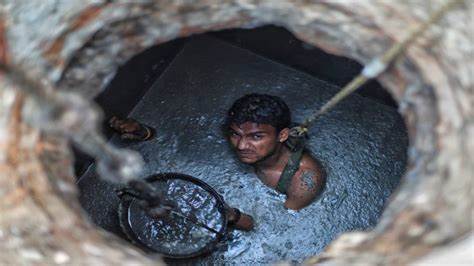
The Karnataka High Court in the case of All India Council of Trade Unions v Union of India and Ors. echoed the sentiments of the legislature and the Apex Court by holding that manual scavenging as a practice was violative of Article 21 of the Constitution as the same ran parallel to the right of an individual to live with dignity. While the decision of the Supreme Court in Safai Karamchari Andolan and Ors. v Union of India and Ors. led to the ‘Prohibition of Employment As Manual Scavengers and their Rehabilitation Act’, 2013 being tabled and passed by the legislature, the act in its present form suffers from various infirmities which without being addressed would make the legislation infructuous. The article observes the rehabilitation mechanism under the legislation and tries to explore the modus operandi for effective and efficient implementation of the same.
Chapter IV of the Legislation
Section 13 of the statute speaks of rehabilitation of manual scavengers by suggesting various remedial measures including creation of an identity card, one-time cash assistance, residential plot etc. and also remarks that the District Magistrate or State Government shall be responsible for the rehabilitation of each and every manual scavenger under Section 13(2). The said provision is a half-hearted attempt as till date no statutory body has been given the responsibility and mandate for the rehabilitation of manual scavengers. This leads to further problems such as failure to anchor responsibilities like funds disposal and allotting residential accommodation, etc. The Supreme Court in Kartar Singh v State of Punjab held that “vague laws may trap the innocent by not providing fair warning”, while in KA Abbas v Union of India it was held that “real rule is that if a law is vague or appears to be so, the construction by the court must be in accordance with the intention of the legislature.” While the intention of the legislature is clear with respect to the enactment, the provision cannot be construed either ways because of the impossibility of pinning liability on one authority.
Furthermore, while referring to cash assistance under Section 13(a) (ii) and (c), the act does not specify the amount to be claimed by the beneficiary or the threshold of amount required to be paid by the government or municipality. In the case of Sri Jeyaram Educational Trust and Ors. v AG Syed Mohideen and Ors. the Apex Court held “a court should open its interpretation took kit containing the settled rules of construction when on a plain reading, a statute appears ambiguous, vague or uncertain.” In the present scenario even if the court were to interpret the legislation according to cannons of interpretation it would lead to a problem as the amount decided by every court would be open to interpretation and hence a uniform solution will not be reached. This will ultimately impact the petitioners/manual scavengers seeking monetary assistance from the court.
Legislation as a Whole
While the legislation has formed committees at the panchayat, state and central level under Section 24, 26 and 29 respectively, the number of incidents arising from manual scavenging have only risen. Additionally, the Central Government under Section 37 of the legislation was required to make rules corresponding to the statute. The step is yet to be taken. The only substantive change which has been brought about by the legislation is the ex-gratia payment given as compensation for death while working as a manual scavenger. While such a lackadaisical attitude by the central and state government was questioned in the PIL before the Karnataka High Court in 2021 no substantive measures have been taken for the rehabilitation of such individuals.
Way Ahead
While the practice of manual scavenging continues at a rapid pace, the problem appears to be steeped in cast hierarchy which has existed for a number of years in India. But the article suggests a proven three-pronged approach which if implemented would possibly help in reducing the cases pending involving manual scavengers in India while suggesting effective methods to rehabilitate them.
- Following the Section 138 Negotiable Instruments (“NI”) Act Model
The Supreme Court through Suo Motu Writ (Criminal) No. 2 of 2020 devised a mechanism whereby retired judges were to be appointed in Special Courts which would expeditiously solve the pending Section 138 matters under the NI Act. The said pilot was to run in 5 districts for a period one year. The same mechanism can be adopted for cases involving manual scavenging. Retired judges/judicial magistrates can be appointed to Special Courts which would hear the matters pertaining to manual scavenging and pass appropriate orders within a matter of 3 months. The said pilot can also run for 1 year and as borrowed from the NI Act model, the settled cases will be sent to the Chief Justice of the respective High Court by the end of the week and the same must be sent as a data point to the State Committee appointed under Section 26 of the statute.
- Apex Court Oversight
In the case of S. Sushma and Anr. v Commissioner of Police and Ors. the Madras High Court concluded by saying that since the issue discussed in the Writ Petition requires constant monitoring, the Writ Petition will be kept pending and appropriate action will be taken time to time in lieu of the situation that arises. With reference to manual scavenging, considering the end goal of alleviating the same, the Supreme Court exercising its power under Article 142 read with Article 141 of the Constitution, must suo-moto take cognizance of the prevailing practice of manual scavenging and must monitor the activities of the central committee while getting constant updates from the respective High Courts on steps taken at the state level. The petition must be kept alive till the time manual scavenging practically eradicates from the picture. The Apex Court can additionally form a committee of serving and retiring judges who may come up with recommendations for rehabilitating manual scavengers and the report must be permeated to the central and state committee for further action.
- Special Lok Adalat
The Chief Justice of the Gujarat High Court while hearing a matter pertaining to pension of retired professors observed that 600 professors were denied pension and hence, he called for a Special Lok Adalat session, whereby their grievances would be solved and the papers releasing their pension would be disbursed. This analogous mechanism appears to be apt for causing a shift in the attitude towards incidents involving manual scavengers. All High Courts must be mandated to hold a special session whereby any problem pertaining to manual scavengers would be addressed and the remaining may be taken up by special courts as addressed above.
Conclusion
While the problem seems insurmountable today, the three-pronged approach is surely to bring relief to manual scavengers and the way they are treated in society. The same will also lead to realization of the true interpretation of legislative intent while passing the statute which was to eradicate manual scavenging from the corridors of India’s future.
*Nikhilesh Koundinya is a 5th year law student pursuing BALLB (Hons.) at Symbiosis Law School, Pune.

 Kautilya Society, RMLNLU
Leave a comment